NEWSLETTER: AUGUST 2026
Finding a Doorway into a Child’s World: An EC’s Reflection
By BS, an EC from the Northern Deanery, Penang Diocese
At Mass that Friday morning, I found myself struggling with a particularly difficult first reading from Nahum, with its vivid images of cracking whips, charging horses, flashing swords and the many slain in the destruction of Nineveh. As I tried to make sense of what I was hearing, I became conscious of the children of different ages and their evangelizing catechists (ECs) around me. Some seemed attentive, while others were fidgeting or looking elsewhere. I could not know what they were making of the reading, but finding it difficult myself, I began to wonder how much of it they might understand.
The children ranged from about seven to seventeen, so what they could understand and take from the reading would naturally differ. Language added another layer of difficulty. The lector proclaimed the reading in Malay, with the text also projected on slides. The Malay used in Scripture and worship contains words and expressions that are not always part of everyday speech, and even some of us who are bilingual or multilingual can find it difficult to follow. Beyond the language itself was the unfamiliar world of Assyria and Nineveh.
All this made me more aware of the distance that can sometimes exist between what is proclaimed or taught and what a child is able to make of it. Age, language, experience and an unfamiliar biblical world can all contribute to that distance. What began with that morning’s reading soon opened into a broader reflection on catechesis: how do we, as ECs, help children find a way into what we are trying to share with them?
The reading from Nahum gave me something concrete to think about. To make sense of the passage, we first have to enter its world. Nineveh was the capital of the Assyrian Empire, whose power and brutality had long threatened the people of Judah. Against that background, the disturbing imagery begins to make more sense. Nahum offers a suffering people the assurance that God has not abandoned them and that oppression will not have the last word.
Understanding this passage from Nahum in its own setting is part of how the Church asks us to approach Scripture. We are to pay attention to the historical circumstances and forms of expression used by the biblical writers (Dei Verbum 12; CCC 110). But understanding the passage ourselves is only part of the task. There is still the question of how a child might begin to make sense of it.
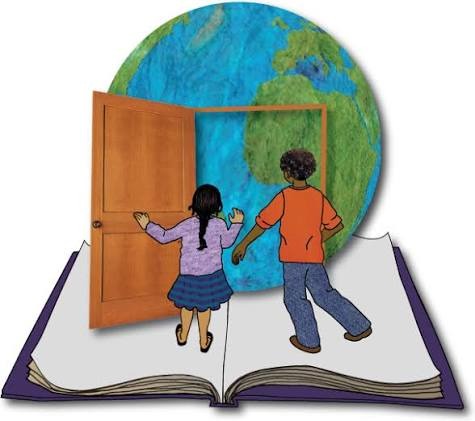
A young child may know nothing about the Assyrian Empire but may understand what it means to be afraid of someone bigger and more powerful. Beginning with that familiar experience could provide a doorway into the unfamiliar world of the reading and the experience of a people living under the shadow of an empire.
A doorway into the reading matters, but so does what the child takes away from it. Without some understanding of the passage, its vivid images of destruction could easily overshadow what Nahum is saying to a suffering people. The Church reminds us to read Scripture within the unity of the whole of Scripture (CCC 112) and, as Christians, in the light of Christ. Perhaps then we can help a child discover in Nahum that God sees suffering and does not ignore injustice, and that oppression will not have the last word.
How we share the faith with children is something we need to keep reflecting on as ECs. The 2026 Catechetical Sunday theme, “Be Christ to others” (Mt 25:40), is a timely reminder of the children entrusted to our care and of what this ministry asks of us.
The term Evangelizing Catechist itself says something about the nature of that ministry. The Directory for Catechesis (2020) places catechesis within the evangelizing mission of the Church, where teaching is joined to witness and accompaniment. Our Diocese is moving in this direction too as it works towards a renewed catechism syllabus for a new generation.
In thinking about the children entrusted to this ministry, some words from Cardinal Sebastian Francis come to mind. Speaking about safeguarding children, he said:
“Keep the Child at the centre of the narrative of the Kingdom of God as Our Lord Jesus did, and you will never go wrong.”
His words speak naturally to ECs as well. Keeping the child at the centre means taking seriously the child before us: age, experience, language, questions and capacity to understand. It does not move Christ from the centre of what we proclaim; rather, it asks us to consider how that proclamation might reach the child we are actually teaching.
Knowing what we teach matters; so does knowing whom we teach. Doing both can make catechesis demanding. Knowledge matters, but so do imagination, discernment, patience and a willingness to listen. Children come to us with different ages, experiences, languages and capacities for attention and understanding. What engages one child may not reach another.
Language can add another layer to that challenge. Some children may be more comfortable in Malay or in a language they use at home or school, while ECs themselves may have to find ways of expressing the faith clearly in a language or register that is not always easy for them either. Even when EC and child share the same language, the words and expressions of Scripture and worship may not belong to everyday speech. Finding language that can reach the child can therefore be part of finding the doorway, without losing what lies beyond it.
The limited time we have with children adds to the challenge. Listening to the homily that morning, I was reminded that even the priest has only a few minutes to break open the Word and leave something with the congregation. ECs too have only so much time with the children each week. We cannot say everything in the time we have, so perhaps the question is what we most hope the children will carry with them.
Beyond completing a lesson, there is the deeper hope of accompanying them in faith and gradually leading them towards Christ. What remains may sometimes be quite small: an insight remembered, a question still being pondered, a glimpse of God that continues to grow after the hour is over.
That leaves me wondering what we are planting in the time we have with them. It may be something whose growth we never see.
Faced with so many demands, ECs need courage and a willingness to keep growing in their ministry. Good intentions alone are not enough; formation and practical skills matter too.
Our preparation matters too. Catechesis calls for more than preparing a lesson. It calls for recollection, prayer and reflection: time to sit with what we hope to share, to understand it as best we can and to allow it first to speak to our own lives. We are, after all, sharing a faith that we ourselves are still learning to live.
Jesus himself so often begins with what people know: seeds and bread, sheep and lamps, families and meals. From the familiar, he opens a way towards something deeper.
And so, I find myself returning to the two images that have emerged from this reflection: the doorway and the seed. We look for a doorway through which a child might enter, and we try to plant something that may remain and grow. We may not always find the right doorway, nor see what becomes of the seed.
Perhaps that is part of the humility of being an EC. We prepare, pray and sow as faithfully as we can, while recognising that the growth is not ours to command. We are trying to lead children towards Christ while learning, ourselves, to follow him. Perhaps the call to “Be Christ to others” begins there.
PDCC is the official body that oversees the development of Catechesis in the Diocese of Penang, Malaysia.
Contacts :
- [email protected]
- Rev Deacon Clement
- PDCC Head: 012-435 0566
- Jeanne J Saw
- Communications: 016-455 4597